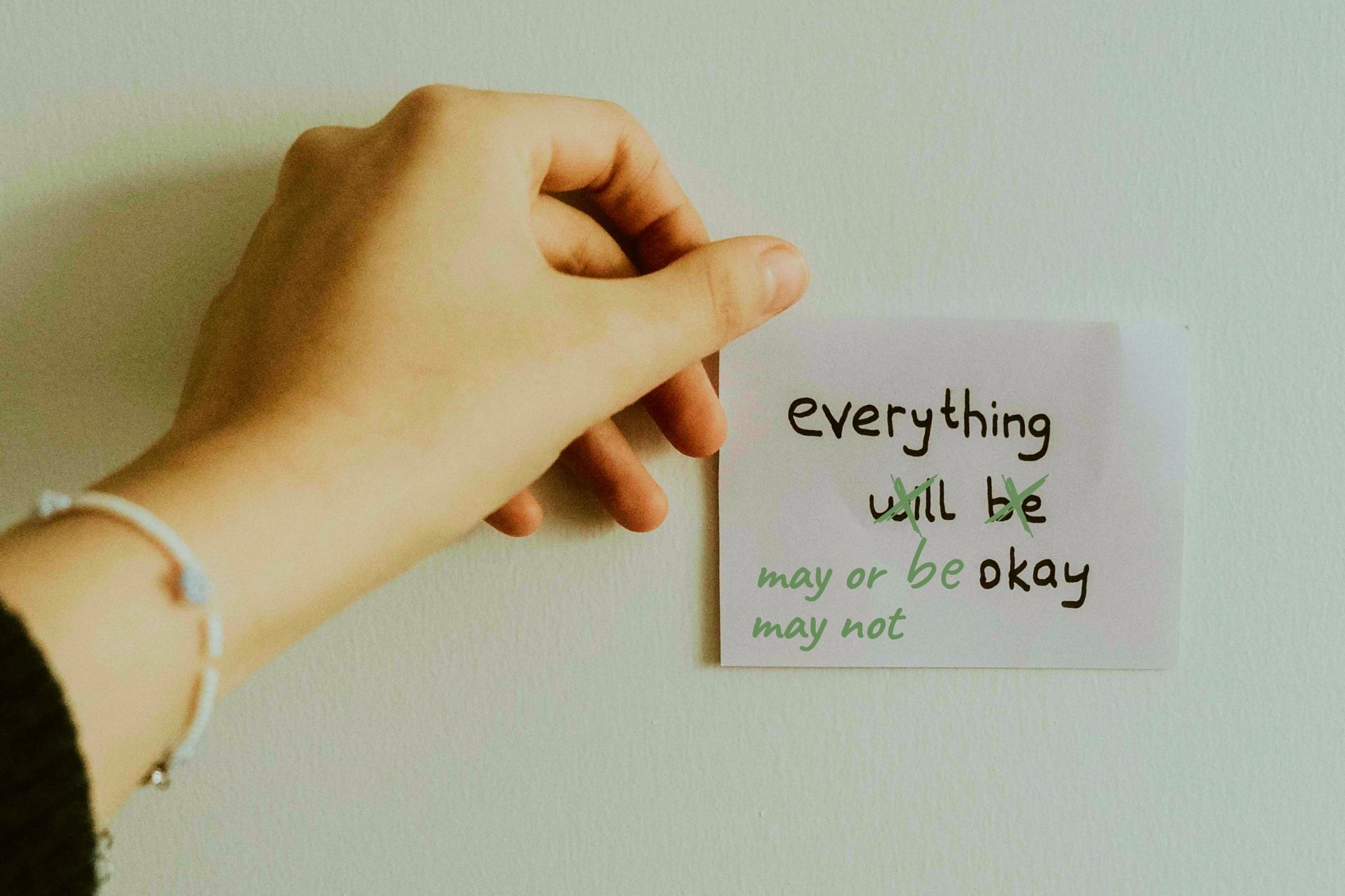

Late ADHD diagnosis Is common
Late ADHD diagnosis is so common it’s basically the pattern. Especially for women and high-maskers. But that doesn’t make it less confusing when you realize it about yourself.
I’ve worked with people for 10 years now, and I hear a version of this constantly. Someone will come in saying, “I tried a lot of different therapies, nothing worked. And then I read something about ADHD and it felt like looking in a mirror.” Or: “I’m tired. I’ve always been tired. And I’m starting to wonder if it’s not just me being lazy.”
So why does this happen so much?
A lot of it comes down to how we defined and spotted ADHD in the first place. The diagnostic criteria, the behaviors we taught doctors and teachers to look for, were based mostly on how ADHD shows up in boys. Boys tend to be noisier, more externally disruptive. They act out. Teachers flag them. They get identified.
Girls can go overlooked because their struggles don’t disrupt the classroom. A kid who’s quietly anxious, daydreaming, and overwhelmed by the sensory chaos but sitting still anyway. She’s not a problem, so she doesn’t get flagged.
There’s also the gendered part of it. We teach girls to be seen and not heard. Sit still, don’t ask too many questions. Be good and quiet. And on some level, a lot of kids internalize that being still and quiet is how you earn approval. If you have ADHD, that’s extra hard. Your brain is wired for movement and stimulation. But it’s doable for a while, especially if you’re smart and care about doing things right.
So kids who might have gotten support never got labeled, they just learned to push harder.
How masking ADHD works and why it’s invisible
Masking sounds like a choice, it’s obviously not. It’s what happens when a brain that needs one thing is living in a world that requires another.
Sitting in a classroom for 6 hours a day isn’t natural for most kids. It’s even less natural for kids with ADHD. But you can do it, you can sit still, take notes and remember what the teacher said, even if it takes everything you have.
And when you do, you get praised. You’re good and smart, you don’t get sent to the principal’s office, you avoid shame. Masking works really well, at least in the short term, so you keep doing it.
But masking costs a lot of constant energy. The kind of energy most people don’t even spend, because they’re not fighting their neurobiology every single day just to seem normal.
And for a long time, you might not even notice you’re masking, because it becomes so automatic, so embedded into who you think you are, that you don’t see it as a mask at all. You think it’s just you, that you’re just lazy when you get home, dramatic when you get upset, and flaky when you lose track of time. You don’t think your brain just spent 8 hours producing at 150% capacity and is now empty.
For a lot of people, it breaks at some point, more often as a form of burnout. It can look different depending on your life. It could be a job that becomes unsustainable, or a relationship that fell apart, a health crisis, a move, a loss… Something that tipped the system over, and makes masking impossible anymore. You can’t perform or push, it becomes impossible. And that’s when people usually start asking: Why am I like this? Why can’t I just push through like everyone else?
And sometimes, the answer is that simple: because your brain just works differently and can’t adapt anymore.
The grief and the relief
Late diagnosis is weird because it brings 2 contradictory feelings at the same time.
There’s real deep relief, suddenly things make sense. Your brain just works in a way that doesn’t match the world we all inherited. You can stop blaming yourself for struggling, and that’s huge.
But there’s also grief.
You look back, and you see all the times you thought something was wrong with you. You see younger versions of yourself struggling and feeling alone. You think about the years you spent pushing, compensating, not knowing why things were so hard.
I’ll give you an example from my own life. My mom told me this story once about first grade. I was having a hard time concentrating. Which, looking back, was sensory overwhelm. My teacher’s response was to turn my desk around, put earmuffs on me, and remove me from the noise. She couldn’t name ADHD or sensory processing issues, but she intuited something was happening. She tried to help.
And it did help for that moment. But no one followed up or looked deeper. So I just learned to mask. And I spent a lot of years after that feeling weird, burning out, thinking if I just tried harder I could figure out how to be normal.
When I realised I had ADHD, I had to grieve all those years. They weren’t wasted but I spent them fighting something I didn’t have to fight. I could have been kinder to myself and maybe built a different life.
That grief is legitimate and it exists right alongside the relief. It’s ok to feel both.
What changes now
Understanding how you work doesn’t change your past, but it does change your future.
You can’t un-diagnose yourself or take away that new awareness. And in a weird way, that’s good because now you get to make different choices. That’s how late ADHD diagnosis looks.
You get to ask: what would my life look like if I stopped trying to mask? What would I do differently if I was designing for my actual neurobiology instead of fighting it?
- Some of those answers might be logistical.
Maybe you need more breaks and drink more water, maybe you need to work with your hands or move while you think. Maybe sitting in silent, fluorescent-lit offices makes your brain shut down. Maybe the world assumes you should know where your keys are, but you actually need a really good system to support you.
- Some of those answers might be relational.
Maybe you’ve been showing up as someone you’re not. Maybe people know the masked version of you really well, but not the real one. That’s worth reckoning with.
- Some of those answers might be about permission.
Permission to rest without guilt and work differently. To stop measuring yourself by a standard that was never adapted for your brain.
ADHD coaching can help you figure out what those answers are. Coaching is different from therapy. Therapy is for working through the past and the wounds. Coaching is for working with the non-linear brain you have now, and building a life that doesn’t require you to fight it every single day.
On ADHD diagnosis
Something I want to be clear about, you don’t need a formal diagnosis to benefit from understanding how ADHD shows up in you.
A lot of people recognize themselves through reading, community, and/or work like this. Some people pursue formal diagnosis because it matters to them. It can be for insurance, reassurance, clarity, for medical documentation. Some people don’t need it. Both are valid.
What matters most is that you notice something and are making sense of it, get curious about how you actually work instead of how you think you should work. That’s a really good start.
What matters most is that you notice something and are making sense of it, get curious about how you actually work instead of how you think you should work. That’s a really good start.
And if you want support in figuring out what late ADHD diagnosis looks like? That’s what I’m here for, that’s my job
Ready to build a life that works for your brain?
If you recognized yourself in this post, you’re not alone and it’s not too late to make different choices.
ADHD coaching is for people who are exhausted by masking and ready to start working with their neurobiology. There is no diagnosis needed and you won’t hear any medical language with me.
Book a free 30-minute exploratory call
We can talk about what brought you here, what you’re noticing about yourself, and whether coaching feels like a fit